Many people have often witnessed such a phenomenon but have not thought about how and why it occurs.
The methods of communication used by cats differ greatly from what we imagine. They have a highly developed sense of smell, which is not only attributed to their olfactory system but also to the vomeronasal organ located behind the front teeth on the upper palate.
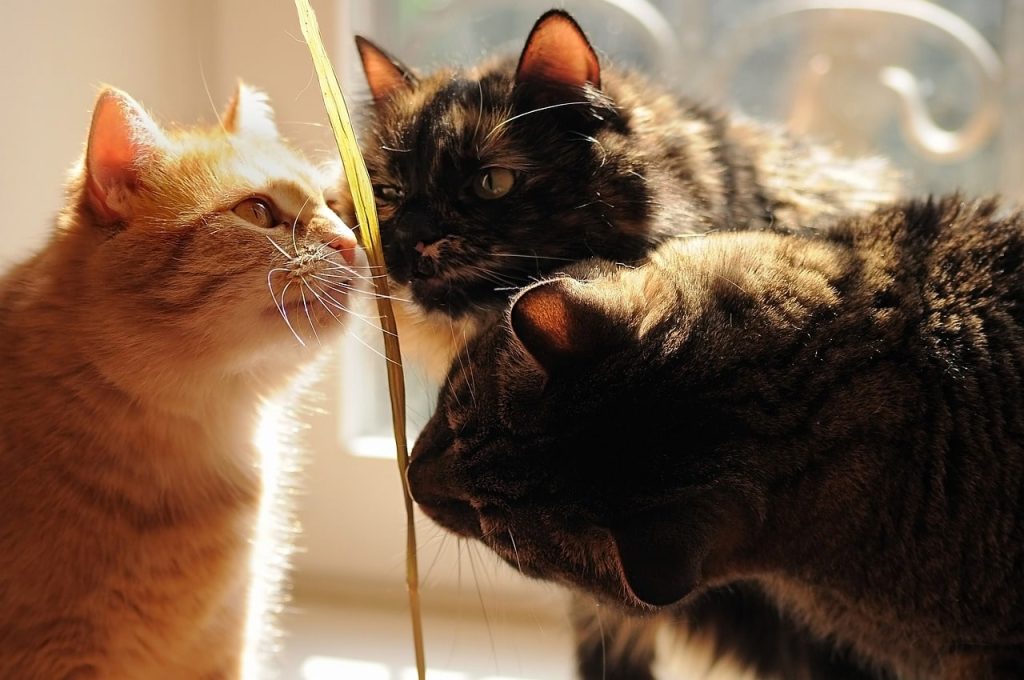
You may be surprised, but cats often open their mouths when they sniff something, whether it’s unfamiliar objects or new items in your home. This behavior is known as the Flehmen response. It involves the cat opening its mouth and performing an invisible curling of the upper lip, creating a sort of pump that helps direct the odors to the vomeronasal organ.
In other words, the cat opens its mouth to sniff as deeply as possible, allowing the chemical substances and pheromones it needs to evaluate to reach the vomeronasal organ. Essentially, it’s a way for the cat to gather information about its surrounding environment.
Therefore, if your cat sniffed clothing and became particularly interested, it decided to gather more information, which is why you witnessed the behavior of the cat sniffing and opening its mouth. It’s a completely natural situation where the animal seeks to extract more from the scent and opens its mouth to take full advantage of the vomeronasal organ’s capabilities.
We’re accustomed to seeing our pets in standard situations where sniffing occurs through active movement of the nose. This way, the cat obtains the minimum amount of information it needs naturally. If it doesn’t require deeper analysis, the vomeronasal organ remains unengaged, and there is no need for mouth opening. However, if the scent is particularly intriguing, the cat will open its mouth.
But if your cat regularly breathes with an open mouth without any apparent reason, it should raise concerns, and you should definitely take your pet to a veterinarian. In some cases, this type of breathing may indicate the presence of inflammatory or infectious processes in the respiratory system.






⚠️ We suggest that you read all the opinions on our portal and take note of them at your own discretion. Do not self-medicate! In our articles we collect the latest scientific data and opinions of authoritative experts in the field of health care. But remember: only a doctor can diagnose and treat.
The portal is intended for users over 13 years old. Some materials may not be suitable for children under the age of 16. We do not collect personal data from children under 13 without parental consent.We have a small request. We strive to create quality content about pet care, and we make it available for free to everyone because we believe everyone deserves accurate and useful information.
Advertising revenue only covers a small portion of our costs, and we want to continue to provide content without having to increase advertising. If you have found our content useful, please support us. It only takes a minute, but your support will help us reduce our reliance on advertising and create even more useful articles. Thank you!