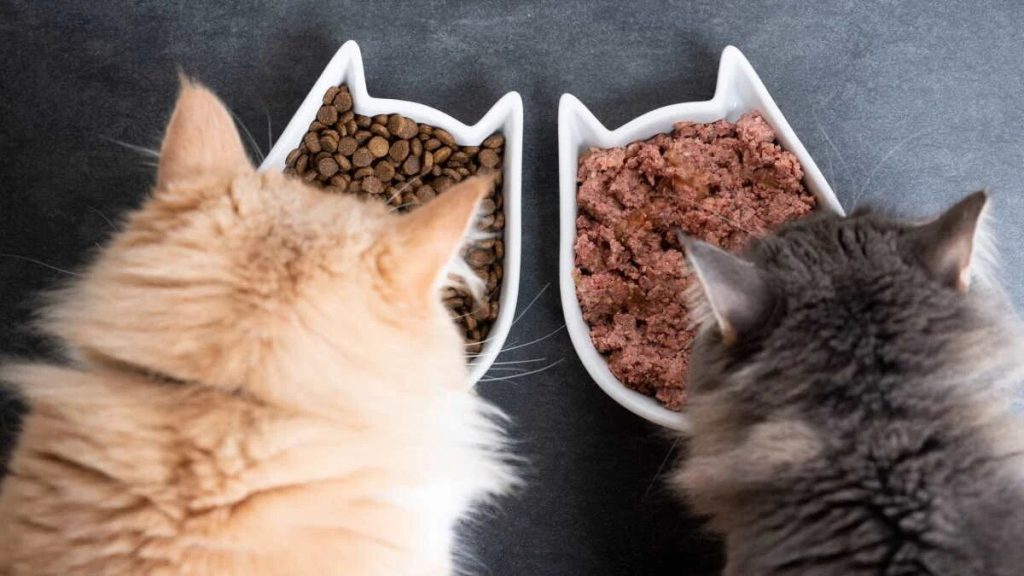
The perennial question among cat owners persists: Is dry or wet food preferable for cats? The answer isn’t a straightforward one. Both options, wet and dry cat food, come with their own advantages and disadvantages. In this exploration of wet vs. dry cat food, we will delve into the various pros and cons to aid you in determining the optimal choice for your beloved feline.
Regardless of whether the food is presented in a dry or wet form, it’s imperative to seek out products that adhere to the standards set by the Association of American Feed Control Officials (AAFCO).
All commercial cat foods—whether dry or wet—should ideally fulfill the nutritional requirements of cats, provided they align with the standards established by the Association of American Feed Control Officials (AAFCO). The presence of the AAFCO label on a cat food package signifies that the product is nutritionally comprehensive and well-balanced to cater to the cat’s particular life stage.
These life stages encompass adulthood, kittenhood, pregnancy and lactation, as well as the all-encompassing “all life stages,” catering to cats of any age.
In principle, the choice between dry and wet cat food might seem inconsequential, but each variant carries its own merits and demerits.
Dry cat food, colloquially known as dry kibble, constitutes a highly processed and shelf-stable sustenance. Sealed in its original bag, dry cat food maintains its quality for an extended period (sometimes reaching a year or more). To ascertain the freshness of an unopened bag, one should check for a “best by” or “use by” date imprinted on the packaging.
Once unsealed, it’s advisable to utilize the dry cat food within approximately six weeks. Despite the temptation to transfer the contents to a plastic container, retaining the food in its original bag proves optimal. This bag boasts a specialized liner engineered to optimize the preservation of the food’s freshness. Rolling the bag’s top down completely while expelling as much air as possible, followed by clipping it securely, aids in maintaining the food’s quality. The bag should then be stored in a cool and dry location.
Wet cat food, commonly referred to as canned food, generally undergoes less processing than its dry counterpart while maintaining robust shelf stability. Unopened cans, trays, and pouches of wet cat food retain their integrity for a considerable duration, often spanning several years.
Much like dry food, it’s important to scrutinize the can, tray, or pouch for a “best by” or “use by” date to determine the viability of unopened wet cat food. Once opened, wet cat food proves to be highly perishable. Left exposed for merely a few hours, wet food can succumb to spoilage, necessitating immediate refrigeration. Leftovers from opened wet food containers should ideally be consumed within a span of five to seven days.
In the end, the choice between wet and dry cat food hinges on various factors, including the cat’s preference, health considerations, and your own lifestyle. Striking a balance between the two types of food might prove beneficial in providing your feline companion with a diverse and wholesome diet.
Pros and Cons of Dry Cat Food: A Comprehensive Analysis
In comparing dry cat food with its wet counterpart, certain advantages and disadvantages emerge. Dry cat food, often characterized by higher carbohydrate content and lower protein content (especially animal-based protein) than wet cat food, is subject to scrutiny. Although cats possess the ability to extract beneficial nutrients from carbohydrates, it’s worth noting that cats do not have a minimum nutritional requirement for carbs.
Cats fall under the category of obligate carnivores, signifying their essential need for animal protein in their diet. Wild cats scarcely consume carbohydrates, if at all, as their diet primarily revolves around ingesting small prey animals.
These diminutive prey creatures offer copious amounts of protein and moderate levels of fat. While dry cat food constitutes a diet type less congruent with the natural order, domesticated cats have adapted to subsist and thrive on such sustenance.
Contrary to the belief that dry food contributes to oral health by scrubbing teeth clean, this notion is largely unfounded due to several factors. For instance, the kibble’s small size renders it prone to crumbling within a cat’s mouth. Furthermore, cats tend to swallow rather than chew their food, diminishing the notion of them gnawing on dry food.
In essence, dry cat food does not confer any superior dental benefits compared to wet food. It doesn’t facilitate teeth cleaning any more than consuming crackers or cereal would bolster human dental hygiene.
However, specific varieties of dry cat food have been meticulously formulated to combat tartar buildup on feline teeth. These specialized dental health formulas, acknowledged by the Veterinary Oral Health Council (VOHC), encompass products such as:
- Hill’s Prescription Diet Feline t/d
- Hill’s Science Diet Oral Care for Cats
- Hill’s Healthy Advantage Oral+ for Cats
- Purina Pro Plan Veterinary Diets DH Feline Formula
- Royal Canin Feline Dental Diet
A significant advantage of dry food is its capacity for prolonged exposure. This trait proves beneficial for cats inclined to nibble intermittently throughout the day. Nevertheless, cats possess no innate sense of portion control, potentially leading to overconsumption if left unchecked. Overweight cats should not have unrestricted access to dry food.
Pros of Dry Cat Food
- Economical
- Extensive shelf life
- Convenient and suitable for extended exposure
- Higher energy density than wet food
- Appealing crunch and flavor for many cats
Cons of Dry Cat Food
- Inferior water content compared to wet food
- Reduced protein content, especially animal-based, relative to most wet foods
- Elevated carbohydrate content compared to wet counterparts
- Challenging for cats with dental problems or missing teeth
- Susceptibility to overeating if accessible all day
In conclusion, the choice between dry and wet cat food entails considering various factors such as the cat’s nutritional needs, oral health considerations, and individual preferences. Selecting a cat food type aligning with these aspects ensures that your feline companion enjoys a wholesome and well-balanced diet.
Advantages and Disadvantages of Wet Cat Food: A Comprehensive Examination
The comparison between wet and dry cat food unveils distinct merits and drawbacks associated with each. Wet cat food, distinguished by its augmented water content, necessitates thorough evaluation when determining its suitability for feline consumption. Cats requiring heightened hydration, such as those afflicted by urinary tract disorders like kidney disease, urinary crystals, or cystitis, can significantly benefit from wet food. Moreover, wet cat food often aligns with the dietary requirements of diabetic cats, given its generally low-carbohydrate composition.
Wet cat food boasts a superior protein content relative to its dry counterpart, particularly in terms of animal-based protein. As obligate carnivores, cats thrive on diets characterized by substantial animal protein, moderate fat content, and minimal carbohydrates. Wet food effectively fulfills these dietary prerequisites.
The delectable taste of wet food garners enthusiasm among many cats, especially finicky eaters and senior felines.
Wet food’s soft texture is particularly advantageous for older cats grappling with dental issues.
However, the primary drawback of wet cat food pertains to its cost. While the elevated moisture content of wet food constitutes a positive attribute, the resulting heightened water weight diminishes its nutrient density. Consequently, a larger quantity of wet food must be purchased and administered to ensure adequate nutrient intake. Furthermore, wet food tends to be more expensive than dry alternatives, ounce for ounce.
An additional downside of wet food lies in its perishable nature. Left unattended, wet food spoils within a few hours, necessitating its prompt removal. This can pose challenges for cats accustomed to nibbling intermittently throughout the day, particularly if their caregivers are unable to provide three to four small meals daily.
Residual wet food must be promptly refrigerated and consumed within a week. Marking the can with the date of opening serves as a practical reminder to monitor freshness.
Pros of Wet Cat Food
- Elevated water content compared to dry food
- Enhanced protein content, especially animal-based, relative to most dry foods
- Reduced carbohydrate content compared to dry counterparts
- Prolonged shelf life when unopened
- Highly appealing flavor
- Beneficial for cats with dental concerns or missing teeth
Cons of Wet Cat Food
- Costly
- Lower energy density than dry food
- Rapid perishability upon opening (requires refrigeration)
Ultimately, the choice between wet and dry cat food demands careful consideration of individual feline needs, dietary preferences, and practical constraints. By aligning the chosen food type with these factors, cat owners can ensure their cherished companions enjoy a nutritionally balanced diet catering to their unique requirements.
Optimal Nutrition: Combining Dry and Wet Cat Food
If you’re grappling with the dilemma of whether to opt for dry or wet cat food, consider embracing the best of both options. A balanced approach involves offering both varieties to your feline companion. For instance, you might provide dry food for breakfast before departing for work and present wet food in the evening upon your return. Alternatively, if your cat tends to consume her meal all at once, blending the two types can be an effective strategy. Incorporating any quantity of wet food into your cat’s diet contributes valuable water and protein.
When introducing a kitten to food, early exposure to both dry and wet varieties is recommended. Cats typically develop taste and texture preferences during their formative kittenhood. Ensuring your kitten experiences both dry and wet foods can prevent future aversions to either type.
Irrespective of your cat’s age, ensure an abundant supply of clean, fresh water is always available.
Should uncertainties persist regarding the most suitable food for your cat, particularly in cases of specific health conditions like kidney disease or diabetes, consult your veterinarian for expert guidance.
Frequently Asked Questions
While healthy cats derive sufficient nutrients from various forms of cat food, provided they bear the Association of American Feed Control Officials (AAFCO) label signifying nutritional completeness and balance, wet cat food offers the added advantages of increased water and protein content. Thus, incorporating wet food into the daily diet is beneficial when feasible.
Indeed, high-quality dry pet food labeled as complete and balanced in line with AAFCO standards can sustain cats independently.
Given the merits and demerits associated with both wet and dry cat food, embracing both options offers a comprehensive approach. This amalgamation capitalizes on the benefits of heightened water and protein content inherent to wet food, alongside the convenience characteristic of dry food.
The popular notion that dry food is superior for dental health compared to wet food largely lacks substantiation. Dry cat food’s dental benefits are akin to crackers or cereal cleansing human teeth. Sole consumption of wet food does not negatively impact dental health. However, dental diets endorsed by the Veterinary Oral Health Council (VOHC) have proven to support oral health and maintain cleaner teeth. Routine feline dental care encompasses daily brushing using pet-safe toothpaste and periodic professional cleanings by a veterinarian, ideally once a year.










Рік 2025 у світі тварин — важливі відкриття та поради.
⚠️ We suggest that you read all the opinions on our portal and take note of them at your own discretion. Do not self-medicate! In our articles we collect the latest scientific data and opinions of authoritative experts in the field of health care. But remember: only a doctor can diagnose and treat.
The portal is intended for users over 13 years old. Some materials may not be suitable for children under the age of 16. We do not collect personal data from children under 13 without parental consent.We have a small request. We strive to create quality content about pet care, and we make it available for free to everyone because we believe everyone deserves accurate and useful information.
Advertising revenue only covers a small portion of our costs, and we want to continue to provide content without having to increase advertising. If you have found our content useful, please support us. It only takes a minute, but your support will help us reduce our reliance on advertising and create even more useful articles. Thank you!