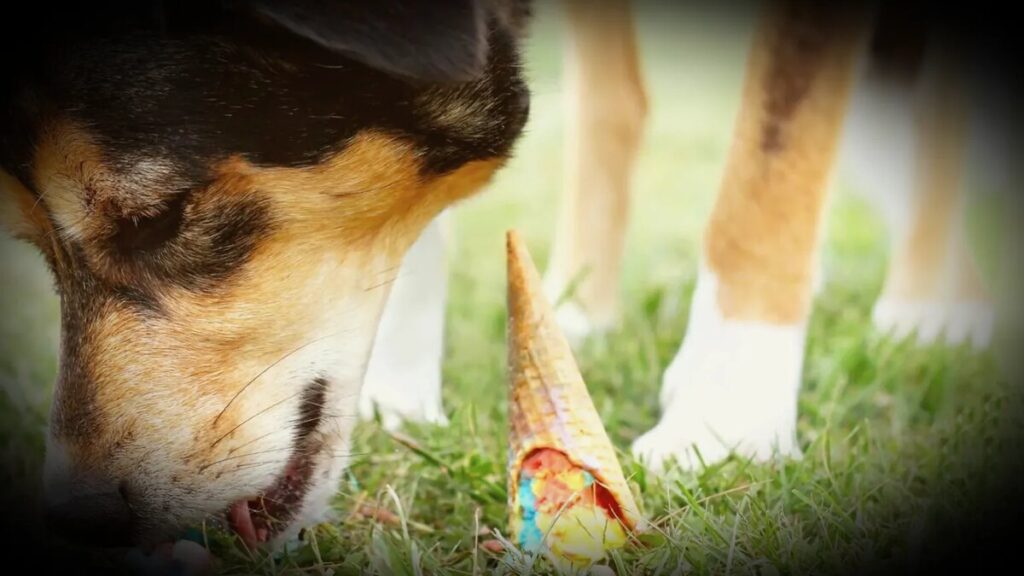
You’ve spent a lot of time training your dog and are proud of his progress in learning important commands that keep him safe. For example, the “come to me” command is important if your dog runs out into the road, and the “lie down” command can help prevent your dog from chasing something like a skunk. But what if a stranger decides to give your dog food? Should you be concerned about this? Teaching your dog not to accept food from strangers is another important skill to keep him safe. This article will show you how to accomplish this!
The material is a development and logical continuation of the topic: How to teach your dog not to pick up food on the street?
Defining the challenges
Convincing your pet not to eat a tasty treat can be difficult. But for his safety (in rare cases where a stranger may have bad intentions) and to keep your dog from becoming a beggar, this skill is very useful. Although cases of dog poisoning are rare, they do happen. It is much more common for dogs to turn into beggars, and this can be annoying to everyone around them.
The best time to start training is when the puppy reaches adolescence. A young puppy should first learn the basic commands and realize that you are the leader, and then you can move on to more advanced exercises. This process can take several weeks of daily training. You can also teach this to adult dogs; you just need to be patient as you will be working together. It’s also important to decide on the extent of the avoidance: do you want your dog to only accept food from you? Or only eat at home? Maybe you want to use a special feeding bowl? All of these factors will influence the learning process.
Preparation
Here’s what can help you:
- Use a variety of goodies in your training: both common dog treats and people’s favorite foods (like cheese and sausage).
- If you’re going to train your dog to eat from only one bowl, choose one that stands out. It’s also important that it can be easily replaced.
- It’s much easier to train your dog if you have a “stranger” to help check on how things are going. Try to involve someone your dog doesn’t know.
- Successful training will require setting aside time for daily training. Don’t expect instant results – it may take a few weeks before your dog understands what is required of him.
- Do your training in different environments to give your dog a chance to test his skills in any setting. Start at home so your pet is not distracted by other dogs. Use an encouraging tone and praise generously for effort and obedience. Remember that dogs are often very food-oriented, so training may take several sessions.
Codeword method
- Code Word Selection. Choose a code word that is not similar to “sit”. For example, use the word “can”.
- Sit the dog. Ask the dog to sit. If she gets up and reaches for the food bowl, make her sit again and wait. Put the food away and try again on the next “sit”.
- Use a code word. Use the word “can” every time you feed your dog by first sitting him down and making him wait.
- Increase the intervals. When the dog understands and internalizes the “can” command, increase the interval between the “sit” command and the serving of food.
- Practice. Practice in other situations using a treat instead of a bowl of food. Use the same approach: sit, wait, “can”.
- Praise. Remember to praise your dog and keep a positive attitude. Be patient.
- Try other words. Use other words to test your dog’s skill. She should not take food or treats until she hears the word “can”.
Eye contact reward method
- Teach your dog the “sit” command. If your dog doesn’t know the “sit” command, practice it until he can do it easily.
- Sit and wait. Ask your dog to sit and wait next to the bowl. It is important that you feed your dog in the same place every day.
- Eye contact. Make eye contact with your dog. Smile so that the contact is positive.
- Eye contact and permission. Once your dog gets used to eye contact, it will become natural. Only let her go to her food with a gesture or word, such as “okay”.
- No eye contact with strangers. A stranger will not know to sit, wait and make eye contact. Practice with someone the dog doesn’t know to make sure he learns his lesson.
Pulse control method
- Gather the treats. Grab a handful of treats and begin training in a location of your choice. This can be inside or outside, depending on your dog’s training level.
- Place the food. Ask the dog to sit. Place the treats on the ground or hold them in your hand.
- Maintaining the “sit” position. The dog must remain in the “sit” position. If it tries to take the food, cover it with your hand.
- Choose a word for the command. When the dog is sitting, give the “can” command, which is a signal that it is now okay to take the food. If the dog tries to take the food without the command, cover it again and repeat.
- Repetition and practice. Practice until the dog waits for the “can” signal to take the treat.
- Scenario. Take a walk with your dog through a yard where something unusual has been left in advance. On leash, walk past the food without letting your dog take it.
- It’s all in your hands. Don’t let your dog eat food outside; train him to eat only at home, and don’t reach for unfamiliar food in unfamiliar surroundings. Now your dog should not take food from the street or without a command.
Головні відкриття у догляді за улюбленцями 2026 року.









⚠️ We suggest that you read all the opinions on our portal and take note of them at your own discretion. Do not self-medicate! In our articles we collect the latest scientific data and opinions of authoritative experts in the field of health care. But remember: only a doctor can diagnose and treat.
The portal is intended for users over 13 years old. Some materials may not be suitable for children under the age of 16. We do not collect personal data from children under 13 without parental consent.We have a small request. We strive to create quality content about pet care, and we make it available for free to everyone because we believe everyone deserves accurate and useful information.
Advertising revenue only covers a small portion of our costs, and we want to continue to provide content without having to increase advertising. If you have found our content useful, please support us. It only takes a minute, but your support will help us reduce our reliance on advertising and create even more useful articles. Thank you!