We realize that for many people this is an urgent problem, and we want to warn you right away: the methods described below do not guarantee 100% success in your case. We are just sharing our experience.
Spoiler: we ourselves do not know what of our actions worked best. So we’ll just describe everything we remember.
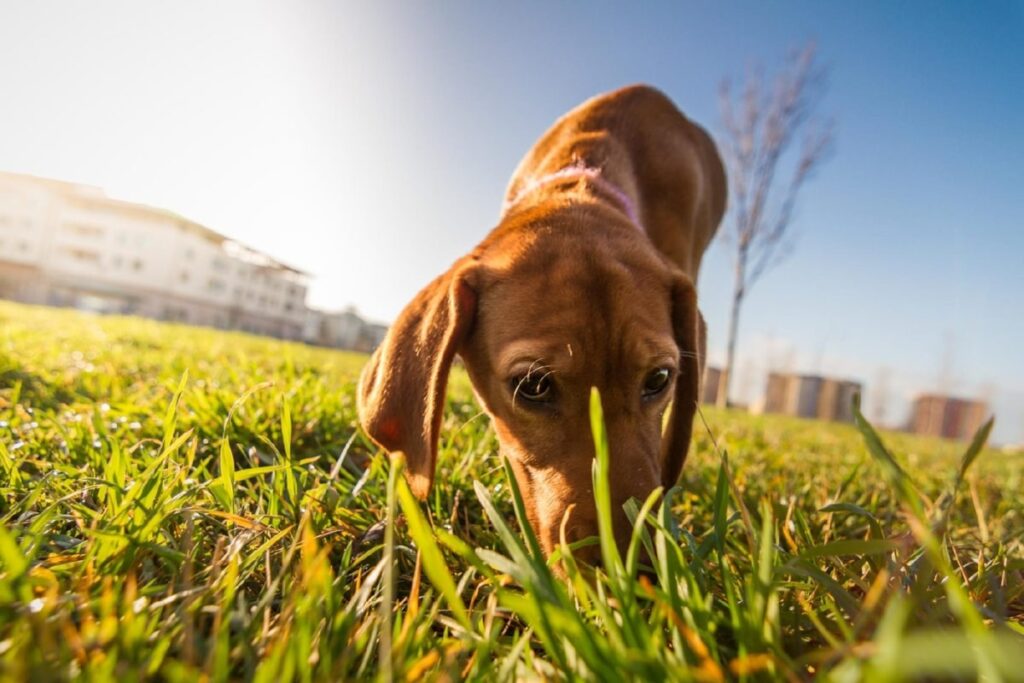
First, let’s remind you that sniffing and picking up food is a completely natural behavior for a dog. It is we humans who intentionally change this behavior because it doesn’t fit in with our lives. Keep this in mind the next time you get mad at your dog for picking up something on the street.
We currently have a 5 year old Zwergschnauzer who hasn’t picked up anything on the street in over two years. But it wasn’t always like this.
From the very first walks, our dog’s favorite pastime was to grab bones in the yard that crows pulled out of garbage cans and run away from us as fast as she could. At first we tried to chase her, but then we realized that wasn’t working and started running away ourselves. The dog, frightened, ran after us, forgetting about the bone, and we praised her at these moments. As an encouragement we used the command “So! Great!” and gave a treat.
This game with bones in the yard stopped quite quickly, but the dog continued to pick up other “finds”.
Command training
At the same time we taught the dog commands, including “You can’t” and “Foo”. The “Foo” command took a long time to learn, it took several months. We followed a standard scheme: first we gave food from the hand, forbidding to take it on the command “Foo” and allowing it on the command “Can”. Then we did the same with the food scattered on the floor.
Gradually we started using this command when the dog tried to pick up something on the street. It worked, but not always – the success depended on the “attractiveness” of the found object.
Tips from other dog owners
On our walks we talked to other dog owners and got lots of advice on how to wean your dog off picking up. We immediately rejected aversive methods as we didn’t want anything negative to happen to our pet. However, we did find one tip about variety in the diet helpful.
At the time, our dog was on a natural diet. We still remember the first time we bought raw cow trebuchet and spent hours cutting it into pieces. The smell was unforgettable and followed us around for a week. Back then, there was no such variety of dried treats, including stomachs. It was hard for our pet to chew the pieces, but he did it with great enthusiasm.
Our food experiments didn’t last long. Twice we gave the dog gastroenteritis by overfeeding him boiled heart. It turned out she didn’t have enough enzymes to digest meat, so the vets switched us to food. There was experimentation with the feeds, too, because we chose them as we knew how, rather than consulting a veterinary nutritionist.
A new approach
The dog was still occasionally picking up food outside, and we decided to get serious about addressing this problem because we were very afraid of poisoning. Intuitively, we realized that if we strictly forbid everything, even sniffing, it will only get worse – the dog will grab the forbidden at the first opportunity. So we decided to reinforce alternative behavior.
We studied the command “Foo” well, but we realized that it was not enough. Just like humans, sometimes it is difficult to give up pleasures, knowing that it is harmful, it was difficult for the dog to overcome the temptation.
We started carrying really tasty treats for her on walks, not food, and tried to diversify her diet not only with dog treats, but also with special food: we gave her pieces of banana or apple. A variety of odors is important for dogs, it is thanks to them that their life becomes more interesting. We never forbade the dog to sniff out what he wanted on the street.
If he tried to grab something, we would say “Yuck” beforehand. The dog would freeze and wait to see what would happen next. And we would offer her a treat from our pocket.
We also introduced the allowed ability to find food into her life with search games.
We practiced daily for 5-6 months. As a result, the behavior stuck perfectly: now the dog just shows us her finds, sniffs them, and we move on. We understand that finding and sniffing food is important to her, and we always praise her for showing but not eating.
It may seem like we’ve had it easy, but it really hasn’t been easy and at times it seems like it’s not working out. We realize that not all dogs will work with our method, as picking up may be a reaction to stress, pain, or other reasons.
What not to do?
Regardless of which training method you choose, we ask: do not use aversive methods such as throwing metal chains or tasers. These methods can cause the dog to become fearful of certain people or other dogs, rather than understanding the connection between his action and pain.
Some people who use these methods say they have tried everything. But usually their training sessions lasted only a few weeks and were haphazard.
Bottom line
What we did to teach our dog not to pick up food:
- Were consistent and persistent.
- Reinforced alternative behaviors.
- Added authorized search games to find food.
- Practiced forbidden commands and enforced them.
- Varied the diet with different treats and extra food.
- And most importantly, we always believed in our dog and in success.
If we succeeded, you will succeed too! We believe in you!
In the next piece, we’ll touch on how to wean your dog off accepting anything from strangers: How do I train my dog not to take food from strangers?
Світ домашніх улюбленців у 2026 — більше тепла, більше любові.








⚠️ We suggest that you read all the opinions on our portal and take note of them at your own discretion. Do not self-medicate! In our articles we collect the latest scientific data and opinions of authoritative experts in the field of health care. But remember: only a doctor can diagnose and treat.
The portal is intended for users over 13 years old. Some materials may not be suitable for children under the age of 16. We do not collect personal data from children under 13 without parental consent.We have a small request. We strive to create quality content about pet care, and we make it available for free to everyone because we believe everyone deserves accurate and useful information.
Advertising revenue only covers a small portion of our costs, and we want to continue to provide content without having to increase advertising. If you have found our content useful, please support us. It only takes a minute, but your support will help us reduce our reliance on advertising and create even more useful articles. Thank you!