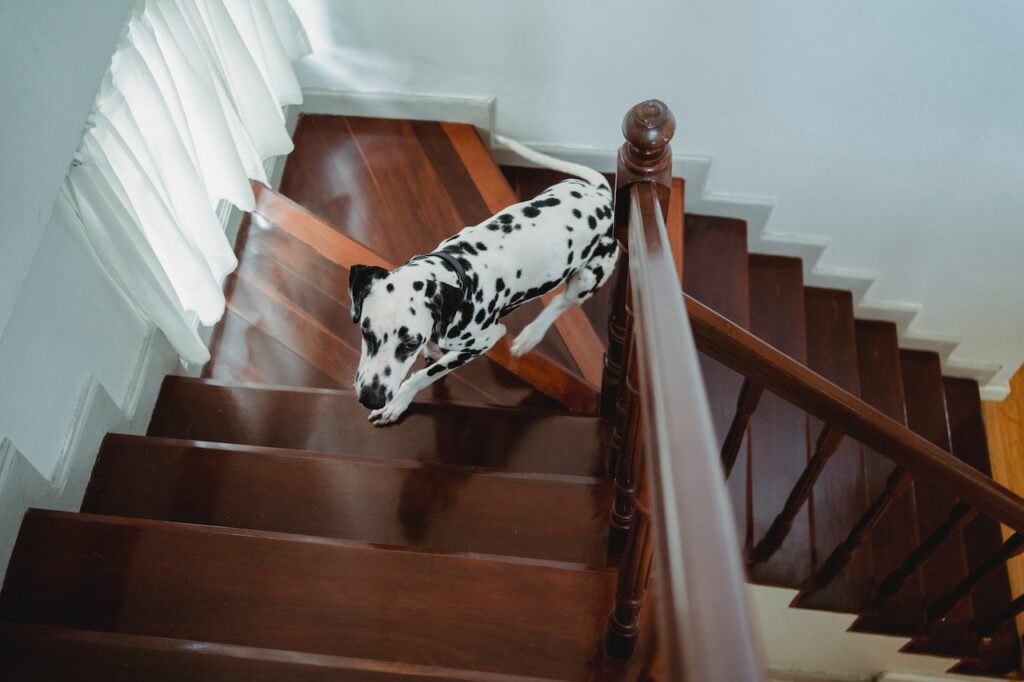
As any dog owner will attest, our canine companions often engage in behaviors that can leave us puzzled. Many of us live in homes or apartments with staircases, and while we may view them as just part of the architecture, our four-legged friends see them as an intriguing adventure waiting to happen.
It seems that our dogs can’t resist the temptation of ascending those steps to explore what lies beyond them, even if we don’t intentionally invite them to the upper floors of our homes.
But what motivates this curiosity, and why do our dogs keep running upstairs, sometimes even when left to their own devices?
Dogs frequently venture upstairs for a variety of reasons, and most of them are closely tied to your presence. They may seek your companionship, experience separation anxiety, be encouraged to go upstairs, or simply act out of boredom. If your dog is heading upstairs on their own, it might indicate fear, illness, a quest for comfort, or just a desire for some solitude.
Let’s lace up our metaphorical walking shoes and delve deeper into understanding these peculiar canine behaviors. We’ll explore the what, when, and why behind their excursions upstairs!
Why Does My Dog Keep Running Upstairs?
First, let’s address your primary question:
Reason 1: Your Dog Wants to Be with You
Our dogs undeniably adore us and cherish our presence since we provide them with food, water, toys, shelter, and, most importantly, affection. While some dog breeds exhibit greater independence, you might have a particularly affectionate furry friend who is always eager to be at your side.
If your canine companion follows you around on the ground floor, craving to be a part of your activities, it’s quite natural for them to accompany you up the staircase as well. They may not have any specific interest in what’s upstairs, but since you’re there, they want to join in. Perhaps they’re accustomed to snuggling in bed with you, which motivates them to go upstairs, whether for a cuddly bedtime or a quick power nap.
It’s worth noting that if your dog exhibits “velcro” behavior, meaning they’re excessively attached and shadowing your every move, it might go beyond enjoying your company. You’ll observe your furry friend constantly at your side, eager to join you in car rides, following your every step up the stairs, and displaying clingy behaviors in general.
While this level of attachment isn’t necessarily negative, it’s important to be mindful, as there’s a fine line between clinginess and potential separation anxiety. If you’re comfortable with your dog’s stair-climbing habit and don’t observe any signs of excessive dependence, then there’s no need for concern. Instead, take delight in the fact that your pup adores being in your company!
Reason 2: Separation Anxiety
Dogs afflicted with separation anxiety can become distressed by various triggers that suggest they might be left alone. Whether it’s the sight of you putting on your shoes in the morning, the sound of the door closing as you step into the shower, or even your approach to the front door, these cues can evoke distress in your furry friend. The resulting symptoms can range from mild to severe, depending on the individual dog.
Before we delve into why your dog frequently accompanies you upstairs, consider watching this informative video to gain a better understanding of this prevalent condition.
For dogs dealing with separation anxiety, going upstairs can exacerbate their anxiety. They may follow you up the stairs without hesitation because they fear being separated from you or losing sight of you.
While there are strategies to alleviate separation anxiety in dogs, it’s essential not to give in to it. I recently fostered a senior chocolate lab who had been abandoned in the fields near my home, and his separation anxiety was quite severe. Within a day, he was practically glued to my side.
It took several weeks of training for him to stop getting agitated as I ascended the stairs, and a few more weeks to extend the time I spent upstairs without him. Despite this progress, he would occasionally wake me in the middle of the night by jumping onto my bed, having breached the pet gate!
Dealing with a dog suffering from separation anxiety isn’t easy, but you don’t have to face it alone. Consult with your veterinarian about behavior modification through training and the possible use of anxiety medications to alleviate your pup’s distress.
In this scenario, your dog going upstairs, especially in your company, only reinforces the separation anxiety.
Reason 3: You’ve Encouraged Your Dog to Do So
If your dog frequently goes upstairs, you might be inadvertently responsible. Allow me to explain. Dogs quickly pick up on behaviors, and even if you’ve encouraged them to come upstairs on a few occasions, that’s enough for them to continue doing so. But why?
By inviting your dog upstairs and rewarding them with praise and affection, you encourage them to seek out these positive reinforcements. They also understand that going upstairs is not discouraged, so they are more likely to repeat this behavior. This unintentional reinforcement occurs.
Another scenario where you may have inadvertently trained your dog to go upstairs is if, as a puppy, you carried them upstairs to join you before they could navigate the steps independently. As your furry friend matures, they perceive this as a regular activity and go upstairs just to hang out. They were never informed that the second floor was off-limits, so they remain unaware of any different expectation.
Neither of these situations is necessarily negative, especially if you enjoy having your dog accompany you upstairs.
Where it might pose a challenge for you is if you don’t want your dog to go upstairs but have allowed them into bed with you on a few occasions (thus inadvertently encouraging them) due to anxiety-inducing situations like storms or fireworks. Now, they associate your bed upstairs with safety and comfort. Even in the absence of fear, who could resist a comfortable bed for snoozing? They might think, “Well, it was acceptable for certain situations, so it must be acceptable all the time, right?”
Reason 4: Boredom
How frequently do you engage in exercise, training, and playtime with your dog? And how long are you away from home without your furry companion by your side?
If you notice your dog frequently heading upstairs, it might be a clear sign of boredom, a yearning for something intriguing to occupy their time!
Perhaps the second floor of your home is an uncharted territory for your dog, harboring undiscovered treasures, or there’s a particular section of carpet that seems ripe for a playful chew. Regardless of the exact stimulus, your dog’s boredom drives them upstairs in search of mental stimulation.
Fortunately, there are numerous effective ways to keep your dog’s mind active and alleviate their restlessness. Mental enrichment holds equal importance alongside physical activity, as multiple research studies have highlighted its significance. Dogs engaged in environmental enrichment activities exhibited more relaxation behaviors and fewer stress-related behaviors, implying that increased participation in such activities results in greater mental satisfaction for your canine companion. This, in turn, alleviates their boredom, leaving you with a content and pleasantly tired pooch.
You might notice your dog heading upstairs at specific times, such as just before your daily exercise routine, in anticipation of playtime, or after an extended period of confinement within a crate. These situations can lead to pent-up energy in your dog, culminating in boredom due to the absence of outlets for both mental and physical stimulation.
For more insights on how to address your dog’s boredom, consider watching this informative video.
Why Does My Dog Ascend the Stairs Solo?
Frequently, we observe our furry companions venturing upstairs for various reasons, most of which involve our presence. But what motivates them to ascend the stairs all by themselves?
Reason 5: Fear
Pay close attention to the occasions when you find your dog independently exploring the upper floor. If this occurs only during visits from family and friends or in the presence of loud noises like fireworks or thunderstorms, fear could be the driving force.
Dogs express fear through what scientists label as the “Four F’s”: flight, fight, freeze, and flirt/fidget (think submission for the last one). Your dog might exhibit one or several of these responses, depending on the specific situation.
A study published in 2017 revealed that, when faced with a fear stimulus, dogs most commonly responded with evasion and freezing, whether the threat was social or non-social.
Seeking refuge upstairs to avoid a distressing event indicates that your dog is employing the flight response. Their aim is to put as much distance as possible between themselves and the perceived threat. If the threat is humans arriving at your front door, then the second story offers an ideal escape route.
If you find your pup hiding under your bed, in their crate, or behind furniture while alone upstairs, it’s likely that they are experiencing fear or even illness (which we’ll explore further below).
It’s advisable to address your dog’s fear of specific stimuli that prompts them to seek refuge upstairs. Prolonged fear in dogs has been associated with a reduced lifespan and an increased risk of various medical issues. It’s crucial to identify the root of this fear and work toward a solution, as we all desire our furry companions to lead long, healthy, and fulfilling lives by our side.
Reason 6: Comfort
Perhaps you’ve installed a pet camera to monitor your four-legged friend while you’re away, and you’ve noticed that they tend to frequent the second floor of your home. However, when you return home, their interest in those stairs diminishes, and they instead seek your attention.
It’s possible that your pup is heading upstairs solo to seek comfort in an object that bears your scent!
Scientific research has shown that dogs possess an impressive sense of smell that not only surpasses that of humans but also allows them to distinguish their owner’s unique scent from a range of options. Inhaling their owner’s scent has been proven to evoke a pleasurable and positive response in every dog studied.
Just take a glance at this video where a dog fails to visually recognize its owner until it sniffs them, resulting in uncontrollable excitement!
Therefore, your dog might be missing you or experiencing anxiety about being alone, and your scent provides comfort while you’re away. What better place to find that comfort than your bed, a frequently used item usually located in an upstairs bedroom, saturated with the familiar scent of their beloved owner – you!
Reason 7: Seeking Solitude
While most dogs typically enjoy affection, attention, and cuddles from their human companions, certain breeds and individual dogs are more independent and value their alone time.
It’s important not to take this personally or worry that something is amiss because dogs, like humans, are social creatures. We appreciate both quality time with loved ones and moments of solitude, which often allow us to recharge, relax, and return to our sociable selves.
This is why you might notice your pup sleeping downstairs or in a separate room; they simply require some time and rest away from the commotion of the human world. After all, don’t we all?
So, if your dog is seeking some solo time, you may observe them ascending the stairs, especially when you’re downstairs. Pay attention to any specific spot upstairs where your dog consistently relaxes. It could be a cozy corner in one of the rooms, a dog bed you’ve set up just for them, or even the cool bathroom tile floor.
Your canine companion might be seeking out their favorite spot in your home because it provides a sense of security and relaxation. This allows them to relish the peace and quiet, providing them with much-needed alone time to rejuvenate and prepare for your next cuddle session!
Reason 8: Physical Health Concerns
I’ve often wished at work that we could communicate directly with dogs and understand their needs more effectively. Life would certainly be simpler if our furry friends could express their feelings and concerns to us. Unfortunately, we can only make educated inferences based on our observations of dog behavior.
One widely agreed-upon principle is that if a dog is constantly hiding or isolating themselves, there’s likely an issue that needs attention.
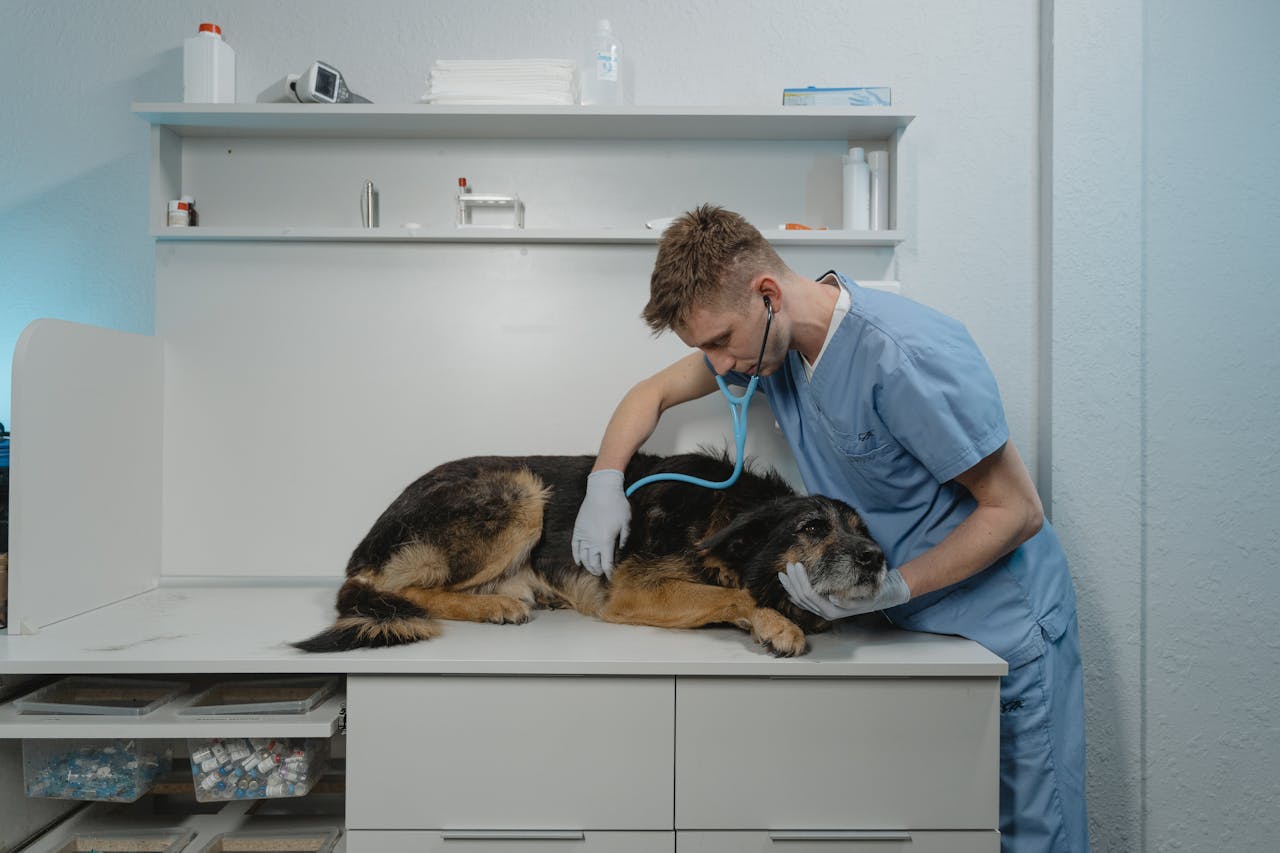
If you find that your dog is consistently absent from their usual spots in the house, opting to hide away upstairs on their own (with no apparent triggers of fear), it’s wise to schedule an appointment with your veterinarian.
Dogs heading upstairs on their own while displaying a lack of interest in typical activities may be indicative of an underlying physical ailment. Their choice to seclude themselves is likely an instinctual response to not feeling well. They seek a place that offers protection, safety, and quietness.
Compare this behavior with other symptoms that could hint at an illness to determine whether physical health concerns might be the reason your dog is going upstairs, especially on their own.
How Can I Modify This Behavior?
For various reasons, you may be inclined to discourage your dog from frequenting the upper floor. Perhaps your dog is getting older, or you have a tiny puppy, making the stairs a potential hazard. Maybe your dog has a penchant for soiling the carpet, or you simply crave a tranquil night’s sleep without the presence of pet dander and hair. Alternatively, you might prefer to reserve the upstairs as a human-only sanctuary.
Thankfully, there are methods you can employ to alter your dog’s behavior and train them to curtail their trips upstairs. You can find detailed guidance on this topic in our comprehensive article by clicking here!
If you seek a physical barrier, pet gates and baby gates are top contenders. For those willing to perpetually leap over a gate, this offers a swift and enduring solution.
If you’d rather not practice your gate-jumping skills, there are alternatives such as deterrent sprays or sticky tape. These create a sensory barrier at the base of your staircase, with the former affecting the sense of smell and the latter influencing the sense of touch.
The most crucial and effective approach, addressing the root of the behavior, involves positive reinforcement training. By rewarding your dog for the desired behaviors and redirecting unwanted actions, you can rewire your dog’s behavior, teaching them that ascending the stairs is not permitted. Instead, they’ll focus on following commands and behaviors that lead to pleasant rewards!
Keep in mind that this process demands patience and consistency, as dogs don’t adjust to new expectations or rules overnight. Training requires time and effort, but the rewards are well worth it!
Closing Remarks
There are numerous reasons why your dog may choose to venture upstairs, especially if they are going up by themselves. While most of these reasons aren’t immediately cause for concern, a few may indicate underlying issues that require attention.
If your dog is unwell, fearful, or struggling with separation anxiety, it’s essential to identify the root cause and work toward alleviating your pet’s distress.
If you have any concerns regarding these possibilities, don’t hesitate to consult your veterinarian. Seeking a professional opinion can provide you and your beloved canine companion with peace of mind.
Some pet owners are perfectly content with their dogs exploring the second floor of their home, while others may want to change this behavior and restrict their dogs to the ground floor. If you belong to the latter group, there are several effective methods to deter your dog from ascending the stairs. Nevertheless, the most effective way to rectify the behavior entirely is through consistent retraining, establishing the upstairs as a no-go area!
And if you delight in your dog’s company during bedtime cuddles and are confident that they simply adore you, cherish the bond you share and carry on!
The most frequent questions and answers on the topic: Why Does My Dog Keep Running Upstairs?
Dogs may go upstairs for various reasons, such as seeking companionship, curiosity, or responding to specific triggers.
Yes, it can be normal, but it depends on the individual dog’s behavior and the underlying reasons.
You can use physical barriers like pet gates, deterrent sprays, or engage in positive reinforcement training to modify your dog’s behavior.
In such cases, it’s advisable to use physical barriers or provide training to ensure their safety on the stairs.
Yes, it’s possible that your dog is seeking refuge upstairs to escape a fear-triggering situation or anxiety.
Identifying the root cause of fear and using positive reinforcement training can help alleviate this behavior.
This could indicate various issues, including physical illness or a desire for solitude. Consult your vet if you suspect illness.
Yes, dogs often seek comfort in familiar scents, which can be found upstairs, particularly on your bed or in a bedroom.
Changing behavior through training requires patience and consistency. The timeframe can vary depending on the dog and the specific issue.
Yes, with proper training and reinforcement, most dogs can learn to stay downstairs and follow your desired behavior patterns.








Поради експертів щодо догляду за улюбленцями у 2025.
⚠️ We suggest that you read all the opinions on our portal and take note of them at your own discretion. Do not self-medicate! In our articles we collect the latest scientific data and opinions of authoritative experts in the field of health care. But remember: only a doctor can diagnose and treat.
The portal is intended for users over 13 years old. Some materials may not be suitable for children under the age of 16. We do not collect personal data from children under 13 without parental consent.We have a small request. We strive to create quality content about pet care, and we make it available for free to everyone because we believe everyone deserves accurate and useful information.
Advertising revenue only covers a small portion of our costs, and we want to continue to provide content without having to increase advertising. If you have found our content useful, please support us. It only takes a minute, but your support will help us reduce our reliance on advertising and create even more useful articles. Thank you!