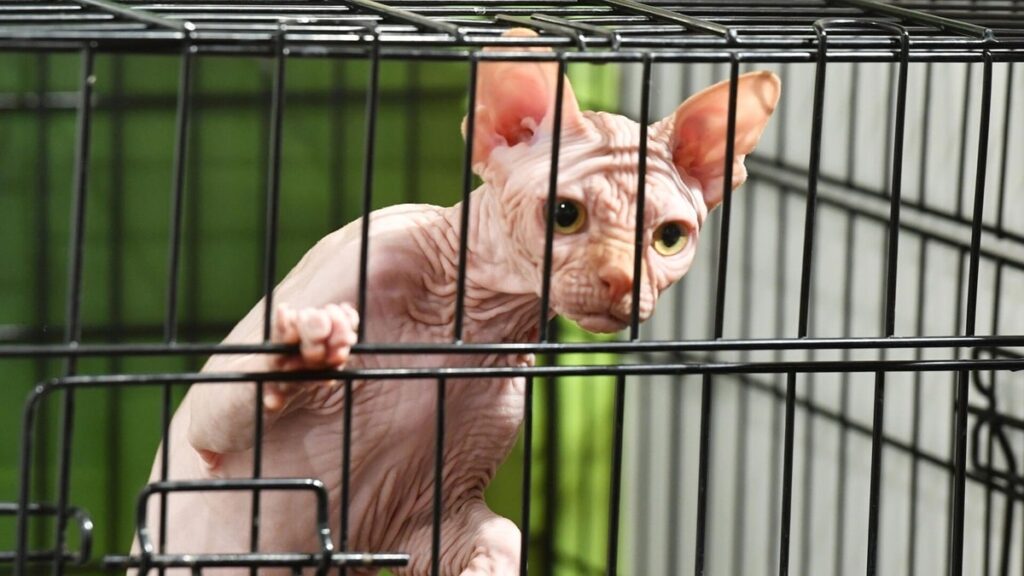
We’ve all been there – a peaceful night’s sleep suddenly interrupted by your feline friend, who has chosen the ungodly hour of 3:30 AM to serenade you with her rendition of the ‘cat chorus.’ But what prompts this nocturnal yowling? What lies behind this behavior in cats? Fear not; there are valid explanations. Here are eight reasons why Princess has taken up the role of your nighttime crooner.
The 4 Attention-Related Reasons
No need to hit the panic button! There are numerous non-threatening factors that can lead to your cat’s ceaseless yowling. It doesn’t necessarily imply a severe health issue, so before rushing to the emergency vet, take a moment to consider the possibilities.
- Hunger Pangs. Just as humans have coined the term ‘hangry’ for the emotional state resulting from prolonged hunger, cats are not immune to these sensations. While you might not have skipped a meal, your cat could be acutely aware that her food bowl is empty and isn’t too pleased about it. Check the time and evaluate when your cat last ate; a growling tummy might be the culprit.
- Loneliness. Despite the common perception of cats as solitary and aloof creatures, they require social interaction, much like humans. Perhaps your cat is feeling a bit lonely and is trying to convey this to you. Cats express affection differently than dogs or humans, so it’s easy to overlook their subtle cues that say, ‘I just want to hang out with you.’
- A Greeting. Not all cats use vocalizations to greet, but some do. Certain breeds, such as Siamese cats, are notably talkative and often engage in what appears to be conversations with their owners. Your cat might simply be sharing details of her day with you, recounting the escapades of a mischievous bird outside the window. Listening to her ‘tales’ could mean the world to her.
- Stress. Now, things take a more serious turn. Cats may vocalize when they’re under stress. Recent changes in their environment, like moving to a new home, or disruptions in their routine can trigger anxiety in cats. Even seemingly minor alterations, like a new job or a different pillow, can leave them feeling unsettled, leading to increased vocalizations.

Why Do Cats Yowl? Exploring 4 Health-Related Reasons and More.
Yowling is a common feline behavior that can be attributed to various reasons, some harmless and others warranting attention. To understand the causes behind your cat’s vocalizations, let’s delve into the four health-related factors to consider:
- Aging. Much like humans, many cats tend to become more vocal as they age. It’s as if they want to reminisce about their ‘glory days,’ but all we hear is ‘meow meow meow!’ While aging-related vocalizations are often benign, it’s still wise to schedule an extra check-up for your senior feline companion. Some cats simply enjoy expressing themselves more in their golden years.
- Mating Behaviors. If your seemingly youthful cat is still yowling and hasn’t been neutered or spayed, mating behaviors may be at play. Cats yowl to signal their readiness to mate, a natural part of their reproductive instincts. Neutered male cats may exhibit residual mating behaviors if they were exposed to high levels of testosterone in the womb. This can result in persistent mating behaviors, including mounting, even after neutering. Nonetheless, in cases where your male cat’s mounting behavior appears to go beyond typical playfulness, Nicholas Dodman, a board-certified Veterinary Behavioral Specialist affiliated with the American College of Veterinary Behaviorists, offers an intriguing theory. Dodman suggests that the process of masculinization commences in the womb, a phenomenon observed in many animals, including cats, where litters are gestated, rather than individual kittens. According to his theory, some male cats may have experienced heightened exposure to testosterone during their prenatal development, resulting in residual behaviors akin to those of intact (non-neutered) males even after they have been neutered. This intriguing theory suggests that such cats, or even dogs, might exhibit what Dodman humorously labels as “super-male Romeo” behaviors. In this scenario, their sisters or brothers might inadvertently become the recipients of their amorous advances, despite the fact that they have no prior experience with this type of behavior.
- Overactive Thyroid. Excessive vocalization in cats has been linked to an overactive thyroid gland. The thyroid gland’s proximity to the larynx, which controls vocalizations, can lead to changes in the sound of your cat’s meows or an increase in vocalization. If your typically quiet cat suddenly becomes a vocal virtuoso, it’s advisable to consult a veterinarian to rule out thyroid issues.
- Kidney Disease. Chronic kidney disease is a concerning health condition that excessive vocalization can sometimes indicate. Cats suffering from kidney disease may vocalize to alert their owners to their discomfort and distress. If your cat’s yowling appears unusual and accompanied by other concerning symptoms, such as increased thirst and urination, it’s crucial to seek veterinary attention promptly.
In Conclusion
Yowling is a multifaceted aspect of feline behavior with a range of potential causes, some of which are entirely normal, while others may indicate underlying health issues. To determine whether your cat’s vocalization is a problem, consider their usual behavior. Has your cat always enjoyed vocalizing, or is the yowling behavior a recent development? If it’s the latter, it may be time to assess their health and take appropriate measures to ensure their well-being.
Frequently asked questions about: Why Do Cats Yowl?
Cats may yowl for various reasons, including:
1. Hunger: Cats may vocalize when they’re hungry, seeking attention or food.
2. Loneliness: Some cats yowl to express their need for social interaction and companionship.
3. Greeting: Cats may vocalize as a way of greeting their owners or other cats.
4. Stress: Changes in the environment or routine can lead to stress-induced yowling in cats.
5. Aging: Older cats may vocalize more, potentially due to age-related changes.
6. Mating Behaviors: Unspayed female cats yowl to signal their readiness to mate, while neutered males may exhibit residual mating behaviors.
7. Overactive Thyroid: Cats with thyroid issues may yowl more frequently.
8. Kidney Disease: Excessive vocalization can sometimes indicate chronic kidney disease or other underlying health problems.
Yowling alone may not always indicate a serious health issue, but it should be taken seriously if it’s unusual for your cat. If yowling is accompanied by other concerning symptoms like increased thirst, changes in behavior, or weight loss, it’s advisable to consult a veterinarian to rule out any underlying health problems.
Addressing excessive yowling depends on the underlying cause. If it’s due to hunger, ensure your cat’s feeding schedule is consistent. If it’s related to loneliness, provide more social interaction and playtime. For stress-related yowling, identify and mitigate stressors. If yowling persists or is accompanied by health concerns, consult a vet for a thorough evaluation and appropriate treatment.





![Tuna Water for Cats: Evaluating its Viability [Advantages & Disadvantages].](https://dbgjqnlcpw0cnuyguiucqr4do40p1pkv.cdn-freehost.com.ua/feeds/wp-content/uploads/2023/08/tuna-water-for-cats-evaluating-its-viability-advantages-disadvantages-300x200.jpg)




Поради експертів щодо догляду за улюбленцями у 2025.
⚠️ We suggest that you read all the opinions on our portal and take note of them at your own discretion. Do not self-medicate! In our articles we collect the latest scientific data and opinions of authoritative experts in the field of health care. But remember: only a doctor can diagnose and treat.
The portal is intended for users over 13 years old. Some materials may not be suitable for children under the age of 16. We do not collect personal data from children under 13 without parental consent.We have a small request. We strive to create quality content about pet care, and we make it available for free to everyone because we believe everyone deserves accurate and useful information.
Advertising revenue only covers a small portion of our costs, and we want to continue to provide content without having to increase advertising. If you have found our content useful, please support us. It only takes a minute, but your support will help us reduce our reliance on advertising and create even more useful articles. Thank you!