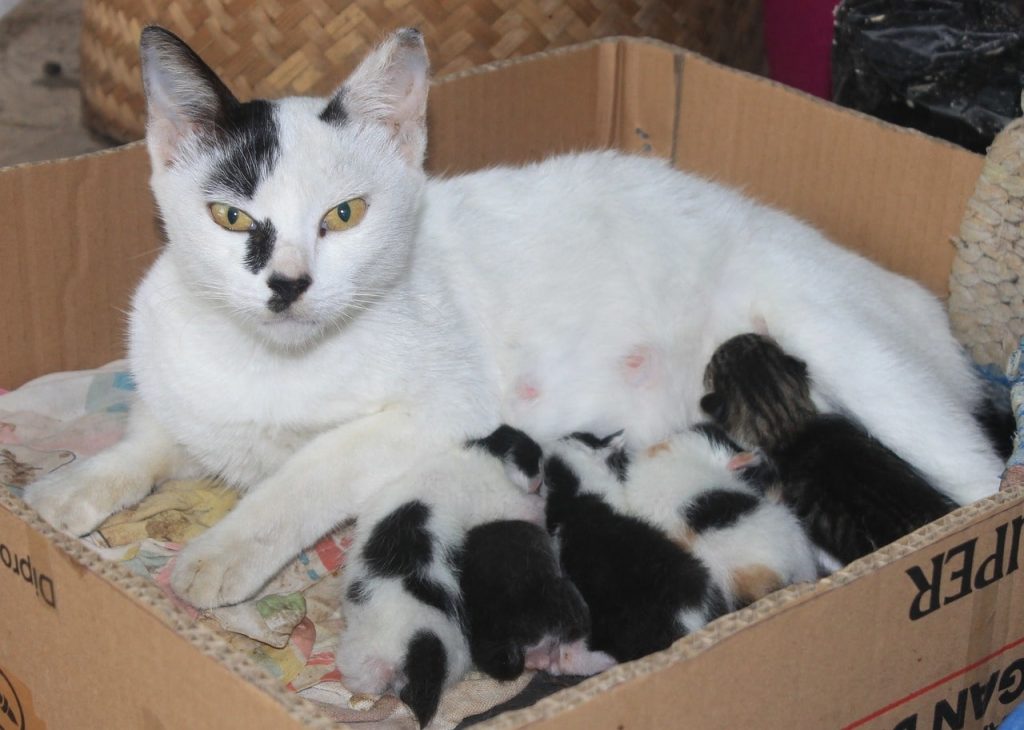
If you happen to be involved in breeding cats or are responsible for the well-being of stray cats that frequently give birth to litters of kittens, one of the most distressing and unsettling occurrences you may encounter is witnessing a mother cat devouring one of her own offspring. Fortunately, such incidents are relatively rare, but they can indeed happen. If the prospect of caring for kittens is on your horizon, read on as we delve into the reasons behind this behavior in cats and the likelihood of it occurring under your supervision, thus allowing you to be better prepared.
The 7 Causes Behind a Cat’s Potential Act of Consuming Their Kittens
1. Health Concerns
One of the prevailing reasons why a mother cat might choose to consume one of her kittens is due to the kitten’s illness or poor health prognosis, making its survival unlikely. In such cases, maternal instincts drive the cat to instinctively eat the unhealthy kitten. Cats possess over 200 million odor receptors in their noses, granting them the ability to detect scents imperceptible to humans. Many experts speculate that cats can discern the scent of disease, and an ailing kitten presents a potential risk to the entire litter. If the sick kitten were to perish, harmful bacteria could rapidly proliferate, endangering the remaining kittens.
2. Stillbirth
As previously mentioned, a deceased kitten can swiftly become a source of bacterial contamination for the litter. Consequently, the mother cat may feel compelled to consume a stillborn kitten.
3. Protective Instincts
You might wonder why one couldn’t simply remove the ailing or deceased kitten from the mother’s vicinity to prevent her from consuming it. The answer lies in the mother cat’s unwavering commitment to protecting her litter, especially during the first week following birth. Any attempts to interfere or tamper with the kittens can trigger the mother’s perception that the nesting area is compromised, leading her to relocate the entire litter. In instances where she encounters difficulty in moving the kittens or perceives an imminent threat, she may resort to eating one or more of the kittens. Consequently, most experts strongly advise avoiding any intrusion into the nesting area at all costs for the initial one to two weeks.
Cats in secure domestic environments are highly unlikely to engage in such behavior, as they feel safe and are generally inclined to relocate the nest if they sense interference. In the wild, however, mother cats face multiple potential predators that may view the kittens as easy prey. In such circumstances, the mother may opt to consume her kittens as a stress-driven measure if she perceives their safety to be at risk.
4. Prolonged and Stressful Labor
Certain cats may endure labor that spans three days or more. While the cat may intermittently eat and drink during this arduous process, it can exact a considerable toll on her physical well-being. Extended labor can leave the cat severely depleted, prompting her to consume a kitten as a means of replenishing some of the vital nutrients lost during labor. Cats are strict carnivores, and by consuming a kitten, they can recover essential nutrients that aid in sustaining the birthing process.
5. Lack of Experience
While rare, inexperience can sometimes lead first-time mother cats to eat their kittens. Your cat may not have the knowledge of what to do with her offspring other than consuming them. Additionally, she might be too rough in her interactions, unintentionally causing harm to her kittens and then consuming the deceased ones.
6. Malnourishment
In the wild, one of the most prevalent reasons a mother cat might resort to eating her kittens is malnourishment. When she lacks essential nutrients, she may turn to consuming her young for sustenance. This behavior often extends to the consumption of the placenta as well. In severe cases of malnourishment, the mother cat may consume the entire litter. If any kittens survive, they will receive heightened nourishment through her breast milk, making the sacrifice of one potentially beneficial for the health of the remaining offspring.
Fortunately, in the United States, it’s relatively uncommon for pet cats to be so underweight that they must eat their kittens for survival. Some experts estimate that as many as 50% of cats over the age of five are overweight and could benefit from losing some weight.
7. Failure to Recognize the Kitten
Another compelling reason to avoid close contact with newborn kittens is that mother cats rely heavily on their acute sense of smell to identify their offspring. Even the slightest alteration in scent could lead the mother to perceive the kitten as a potential threat, prompting her to eliminate it for the safety of the litter. A mere touch can often suffice to alter the kitten’s scent and confuse the mother.
Do Male Cats Consume Kittens? Male cats typically do not consume kittens; their primary concerns revolve around defending their territory and attracting females for mating. During the initial weeks after birth, there is minimal risk of the father approaching the kittens. However, male cats may engage in aggression towards kittens as a means of establishing dominance and inducing a female into heat.
How Can I Prevent My Cat from Eating Her Kittens?
The most effective strategy to prevent your cat from consuming her kittens is to maintain her overall health when she is not pregnant. Ensure that your queen receives a well-balanced and nutritious diet during pregnancy and lactation. When the time for birth arrives, provide her with a secluded and quiet area free from disturbances. Resist the urge to intervene in any way, as interfering could make her feel that the safety of the litter is compromised, increasing the risk of her consuming the kittens.
Closing Thoughts
The most common scenario in which a cat might eat her kittens is when they are born unhealthy or stillborn. While other reasons are possible, they are more frequently observed in feral cats living in the wild, devoid of the advantages of reliable food and shelter.
We hope you found this concise guide informative and helpful in addressing your questions.
Frequently asked questions about: Why Do Cats Sometimes Eat Their Kittens?
Cats may eat their kittens for several reasons, including:
1. Health Concerns: If a kitten is unhealthy or has a low chance of survival, the mother cat may instinctively eat it to prevent the spread of disease and protect the rest of the litter.
2. Stillbirth: When a kitten is stillborn, it can become a source of bacterial contamination. The mother may consume it to avoid this risk.
3. Protective Instincts: Mother cats are highly protective of their litters, especially in the first week. Any interference with the kittens can trigger the mother to move them or, in extreme cases, eat them to safeguard the litter.
4. Long and Stressful Labor: Extended labor can leave the mother cat famished. Eating a kitten can help replenish lost nutrients and support the birthing process.
5. Inexperience: First-time mother cats may lack the knowledge of how to care for their kittens properly. Inexperienced mothers might accidentally harm their kittens and resort to consuming them.
6. Malnourishment: In the wild, malnourished mother cats may eat their kittens for essential nutrients, including the placenta. Extreme malnourishment can lead to consuming the entire litter.
7. Failure to Recognize the Kitten: Mother cats rely on their sense of smell to identify their offspring. If a kitten’s scent changes, the mother may perceive it as a threat and eliminate it.
Male cats typically do not eat kittens. Their primary concerns are defending their territory and attracting females for mating. While they may show aggression toward kittens to establish dominance, they are not known for consuming them.
To prevent a mother cat from eating her kittens:
1. Maintain Her Health: Ensure she receives a nutritious diet during pregnancy and lactation.
2. Provide a Quiet, Secluded Area: Create a safe, quiet space for her to give birth, minimizing disturbances.
3. Avoid Interference: Resist the urge to interfere with the kittens during the first week, as this can trigger the mother’s protective instincts.
In the United States, it’s uncommon for pet cats to be severely malnourished because responsible pet owners provide proper nutrition. However, some experts estimate that a significant percentage of pet cats are overweight or obese, highlighting the importance of balanced diets.
If a mother cat mistakenly consumes a kitten due to scent confusion, it can be a tragic event. In such cases, the best course of action is to ensure the remaining kittens’ safety and well-being, while also providing supportive care to the mother to prevent further distress.
Sources
- How Old Do Cats Have To Be To Get Pregnant?
- How Does a Cat Carry a Kitten?
- Runt of the Cat Litter: How to Tell, Implications, & FAQs (Vet Answer)



Найкращі практики догляду за хвостиками у 2025.
⚠️ We suggest that you read all the opinions on our portal and take note of them at your own discretion. Do not self-medicate! In our articles we collect the latest scientific data and opinions of authoritative experts in the field of health care. But remember: only a doctor can diagnose and treat.
The portal is intended for users over 13 years old. Some materials may not be suitable for children under the age of 16. We do not collect personal data from children under 13 without parental consent.We have a small request. We strive to create quality content about pet care, and we make it available for free to everyone because we believe everyone deserves accurate and useful information.
Advertising revenue only covers a small portion of our costs, and we want to continue to provide content without having to increase advertising. If you have found our content useful, please support us. It only takes a minute, but your support will help us reduce our reliance on advertising and create even more useful articles. Thank you!