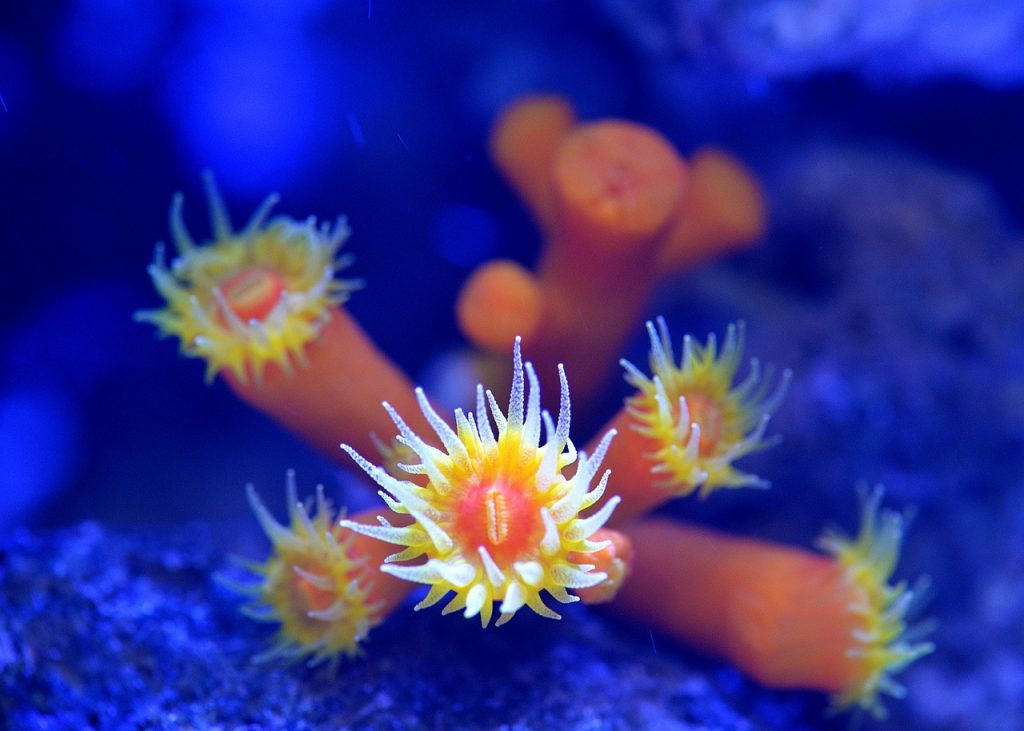
We all know the variety of colors that reef tanks can be lit in, whether it’s blue, white, purple, green, red, etc.
However, choosing the best color for a coral tank can be quite frustrating, as there are many variables in the equation.
That is why I decided to devote an entire article to this topic. So, without further ado, let’s dive right into it.
What Light Color Is Best For Coral Growth?
Blue light is the best color for coral growth because it optimizes photosynthesis in zooxanthellae, but if it’s not available, white light is a good option as it contains all visible wavelengths and mimics sunlight.
Most corals cannot survive without light.
This is because they get their nutrients from zooxanthellae, microorganisms in a coral’s tissue that use light for photosynthesis.
You can find reef tank lights in numerous colors. But which light color is the best? Well, your options mainly include the following:
1. Blue (Best For Coral Growth)
Blue is the best color for maximizing growth in corals. Chlorophyll A favors wavelengths between 440 and 675nm.
At 450 to 495nm, blue light has a shorter wavelength that optimizes photosynthesis in zooxanthellae. It also boasts greater penetrative power.
Have you noticed that blue is the only color you can see at the lowest depths of a water body in the wild?
The other colors attenuate after a few meters. As such, corals at the bottom have learned to photosynthesize efficiently using blue light.
This doesn’t mean blue light is useless to shallow coral species. The color stands out because it can deliver a lot of energy at low intensities.
2. White (If Blue Is Not Available)
You find this color in daylight bulbs, the most popular lighting option on the market. Daylight bulbs have a kelvin rating of 6,500K, which matches the sun.
This is not a coincidence. Daylight bulbs are designed to mimic sunlight.
If corals in the wild can survive under the glare of the sun, you can trust them to thrive in a tank with white light.
Aquarists that can’t choose a color use white light because it contains all the visible wavelengths, including violet, blue, green, yellow, orange, and red.
Additionally, white is the brightest of the colors, so you can trust it to boost visibility at all times of the day or night.
However, that brightness makes white a danger to fish in reef tanks at night. Regardless of the color, corals need at least 6 hours of darkness.
Can I Use Other Colors In My Coral Tank?
Besides blue and white, there are a few other colors to consider when it comes to corals:
1. Violet (A Reasonable Alternative)
Violet has an even shorter wavelength than blue (380 – 450nm).
Therefore, it penetrates deeper into the water and stimulates photosynthesis more powerfully than blue light. Many aquarists use blue when they can’t find violet.
2. Red (May Suppress Coral Growth)
Red falls within the 620 to 750nm range.
It has the longest wavelength, which is why it can’t match the energy blue light delivers. Additionally, water absorbs the color after a few meters.
At depths of 70 feet, a red apple will take on a greyish color because there’s no red light to reflect into your eyes at that point.
Some studies have even highlighted the threat this color poses to corals.
It appears to repress growth in some species, probably because they evolved to only photosynthesize under blue light or the red light was too strong.
Despite these concerns, red is a common color in reef tanks because it can trigger and enhance photosynthesis.
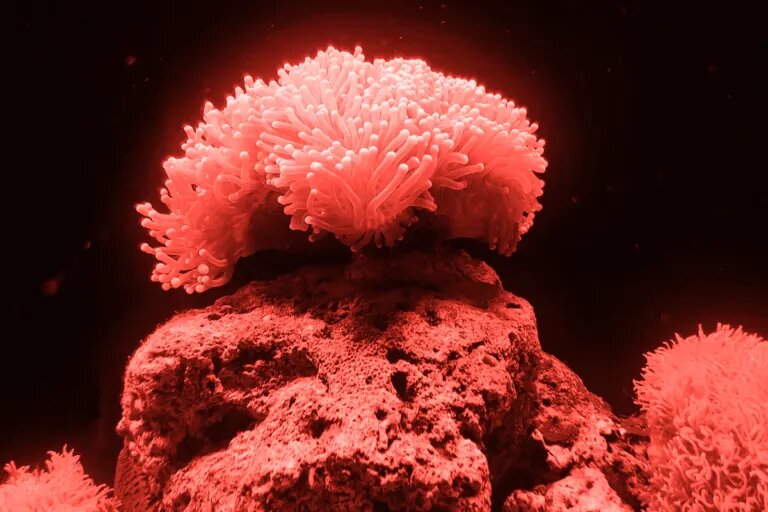
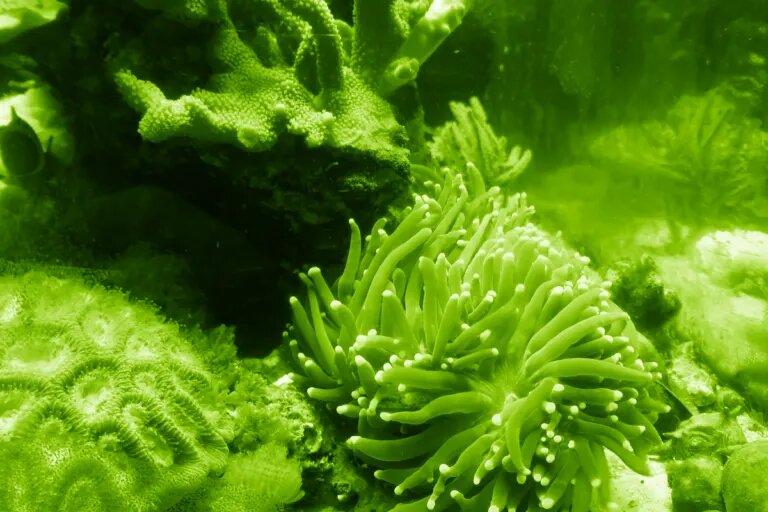
3. Green (Barely Boosts Photosynthesis)
Aquarists often dismiss green as an ineffective low-energy color. Ineffective in the sense that it doesn’t have a biological benefit.
It cannot boost photosynthesis to substantial levels or enhance coral growth.
Instead, the light improves coral coloration by stimulating DsRed fluorescent proteins. This allows the coral to generate vibrant colors, not just green but red and orange.
In recent years, some experts have pushed back against the notion that green is useless. They think the color matters because it penetrates deeper into coral tissue.
However, for now, green is an aesthetic tool. People use it to improve the reef tank’s appearance and nothing else.
4. Yellow (Doesn’t Provide Enough Energy)
Yellow is similar to red in that it attenuates after 30 – 50 meters because the color has a longer wavelength. Red disappears first, followed by orange and then yellow.
Photosynthesis can occur under yellow light in a reef tank. However, the color doesn’t provide enough energy.
Therefore, you should expect a significant reduction in the photosynthetic intensity in reef tanks lit by only yellow LEDs.
Orange is in a similar boat. Many aquarists ignore yellow, orange, and green when they install lighting systems for their corals.
What If I Have Full-Spectrum LEDs?
If you have a lighting system with all the colors, which colors should you prioritize?
Full-spectrum lights are convenient because you can program the system to fit each coral type’s lighting requirements.
Naturally, you can’t go wrong with blue. First, this is a high-energy color that enhances photosynthesis.
Secondly, the color is dim. You can keep the blue light at 100 percent intensity without overwhelming the corals.
Red is a decent substitute for blue. However, it can boost algae growth. Therefore, you should limit the intensity.
Make the red light bright enough for you to barely notice it. Green’s intensity should match red.
You must play it safe with red because some corals (such as Stylocoeniella) hate red.
White is tricky because it benefits all types of corals. However, the color is bright and can easily bleach your corals. Keep it lower than 50 percent.
If you exceed 50 percent, reduce the photoperiod. Lighting is an unpredictable subject.
Don’t be afraid to experiment. Try new combinations and intensities until you find a lighting program that works.
Do Corals Need More Blue Or White Light?
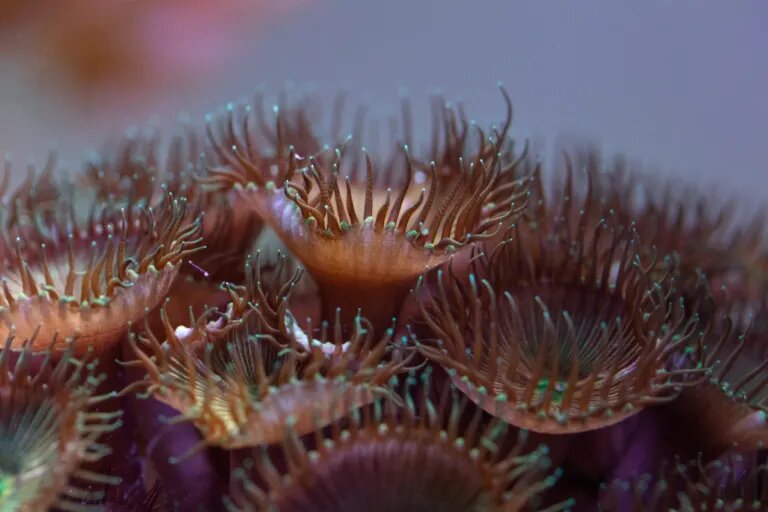
Corals need more blue than white light. The organisms can thrive under white light. After all, it has all the other colors.
However, white light is too bright, and you can easily kill your corals by raising the intensity above the appropriate threshold.
You see this in the wild, where intense sunlight bleaches coral reefs by raising the water temperature.
Daylight bulbs, which generate white light, mimic the sun. You are less likely to bleach corals with blue light because the color is too dim.
More importantly, blue is high-energy. You can stimulate photosynthesis even when the blue light is at a low intensity.
This is why aquarists program full-spectrum lights to deliver more blue than white in a reef tank.
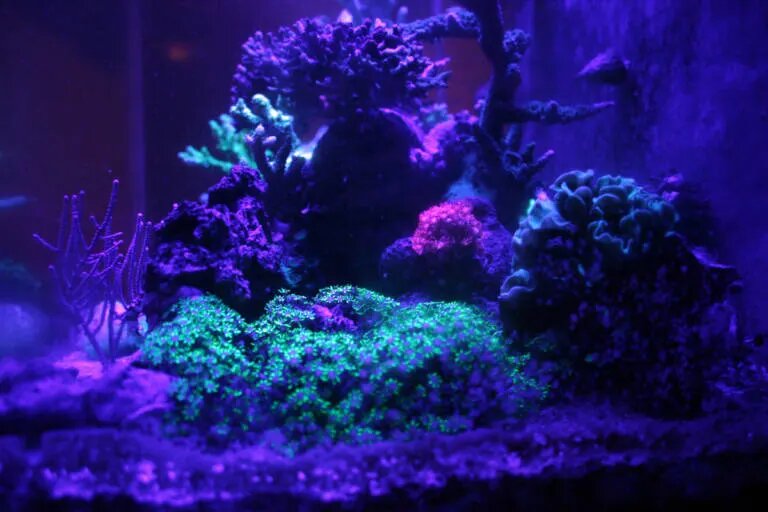
What Color Light Makes Corals Glow?
Most colors can improve a coral’s appearance. The key is to add them to the tank at the correct intensities.
This assumes that you have a full-spectrum system. If you want to install a single color, you can’t go wrong with blue.
Researchers performed a study designed to explain why deeper-dwelling corals had such vivid colors even though they had little or no access to sunlight.
They found that blue was to blame because the color had enough penetrative power to reach deep-sea corals.
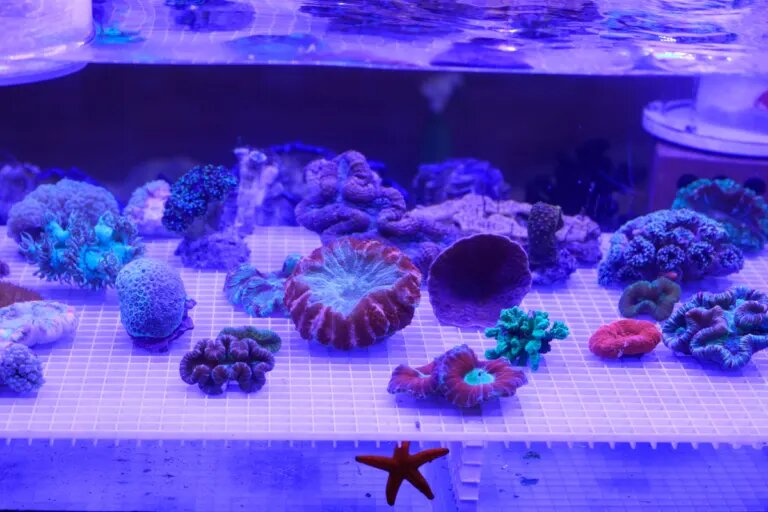
Exposure to blue and ultraviolet light generated a red and green glow in the corals.
How To Easily Light A Coral Tank
As you can probably tell, lighting a coral tank can be challenging. You may forget to turn the lights on and off or change the intensity time.
What I personally do in my tank is to incorporate a schedule that includes both blue and white lights.
This way, the zooxanthellae get enough power for photosynthesis (from the blue), but I also get to see my aquarium properly (thanks to the white).
Using the DIY mode, you can set the timer to the following schedule:
| 9 am – 10 am | White light (20% intensity) |
| 10 am – 11 am | White light (50% intensity) |
| 11 am – 12 am | White light (75% intensity) |
| 12 am – 6 pm | White light (100% intensity) |
| 6 pm – 11 pm | Blue light |
| 11 pm | Lights Off |
You can also use a single color, be it blue or white. It mostly depends on your preferences. Here is a general schedule if you like this option:
| 10 am | Light on (20 percent) |
| 12 am | Increase light to 50 percent |
| 1 pm | Increase light to 75 percent |
| 2 pm – 8 pm | Light is at full (100 percent) intensity |
| 9 pm | Decrease intensity to 60 percent |
| 10 pm | Decrease intensity to 20 percent |
| 11 pm | Shut lights off |
Pro Tip: Feeling uncertain about how to light your coral tank? Don’t worry, I’ve got you covered with my ultimate guide on the topic.
Conclusions
If you’re in a hurry, here’s a quick rundown of the key points mentioned above:
- Corals require light for growth, and the nutrients they get from zooxanthellae, microorganisms in their tissue, are generated by photosynthesis, which is fueled by light.
- Blue light is the best color for maximizing coral growth, as it optimizes photosynthesis in zooxanthellae due to its short wavelength, and it has greater penetrative power.
- White light is a good alternative if blue light is not available since it matches the sun’s kelvin rating of 6,500K and contains all visible wavelengths.
- Red light may repress coral growth in some species, but it is a common color in reef tanks because it can trigger and enhance photosynthesis.
- Green light is often dismissed as ineffective for coral growth but can improve coral coloration by stimulating DsRed fluorescent proteins.
- Violet light is a reasonable alternative to blue light as it penetrates deeper into the water and stimulates photosynthesis more powerfully than blue light.
View Sources
- https://study.com/academy/lesson/white-light-definition-source-spectrum.html
- https://pmc.ncbi.nlm.nih.gov/articles/PMC3962463/
- https://reefbuilders.com/2010/04/06/green-light-fluorescence-red/
- http://www.waterencyclopedia.com/La-Mi/Light-Transmission-in-the-Ocean.html
- https://www.nationalgeographic.com/science/article/150629-glowing-fluorescent-corals-science
Розбір теми 2026 року.


⚠️ We suggest that you read all the opinions on our portal and take note of them at your own discretion. Do not self-medicate! In our articles we collect the latest scientific data and opinions of authoritative experts in the field of health care. But remember: only a doctor can diagnose and treat.
The portal is intended for users over 13 years old. Some materials may not be suitable for children under the age of 16. We do not collect personal data from children under 13 without parental consent.We have a small request. We strive to create quality content about pet care, and we make it available for free to everyone because we believe everyone deserves accurate and useful information.
Advertising revenue only covers a small portion of our costs, and we want to continue to provide content without having to increase advertising. If you have found our content useful, please support us. It only takes a minute, but your support will help us reduce our reliance on advertising and create even more useful articles. Thank you!